Searching for a Sound
The Origins of the Plant Radio
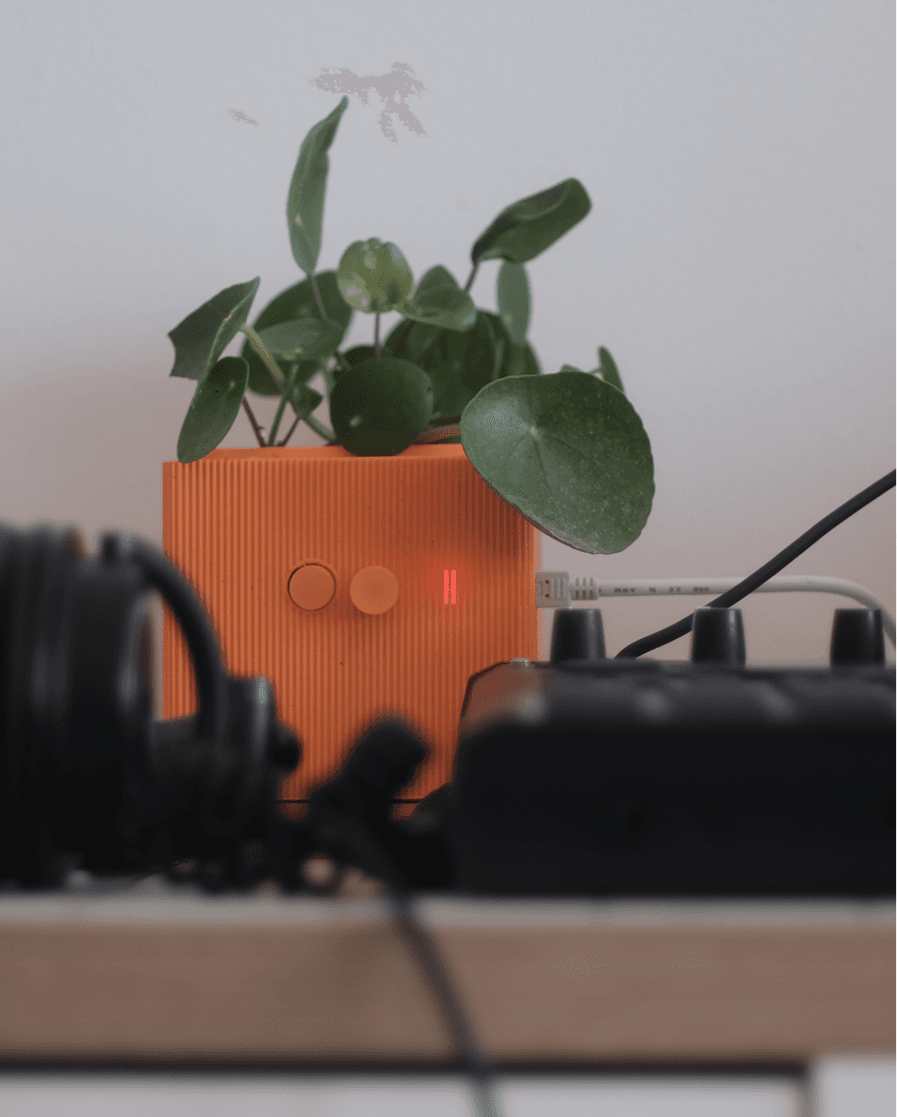
The Plant Radio takes micro-electrical pulses from plant roots and soil and turns them into MIDI data. There's a whole exchange happening underground: nutrients, sugars, moving between roots all the time. MIDI just gives us a way to listen in.
The idea started at the Institute for Advanced Architecture of Catalonia. A colleague and I built a few plant-data sonification devices and set up a sound installation for kids to interact with. The devices connected to plant leaves and converted their conductivity into notes on a keyboard. Seeing how children responded to hearing plants made me notice a potential impact this may have on them. They weren't seeing plants as stationary objects anymore. They were touching leaves, hearing them respond in real time, feeling how alive they actually are.
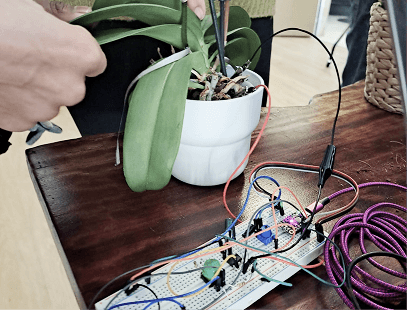
We built the devices off the electricityforprogress open source project, using breadboards and resources from Fab Lab Barcelona. The documentation made the build straightforward as we only modified the code to match our hardware. I'd never built anything close to a synthesizer before. I will always look back at this as the beginning of my hardware development.
electricityforprogress on GitHubAfter the installation ended, I kept iterating. The devices were still wired on breadboards so I wanted something permanent. One comment from the installation stuck with me: a parent who taught yoga said she'd love this in her studio. That pushed me to start thinking about an actual instrument.
I experimented with the roots too, not just the leaves. Sensors in the soil turned out to have their own rhythmic nature, and their own biological story worth digging into further.
The real limitation was that everything depended on a synthesizer, software, a speaker, and a mess of wires. That exposure was part of the magic at the installation as you could see the whole system working. But if someone just wanted to hear their plant, with nothing else required, they couldn't.
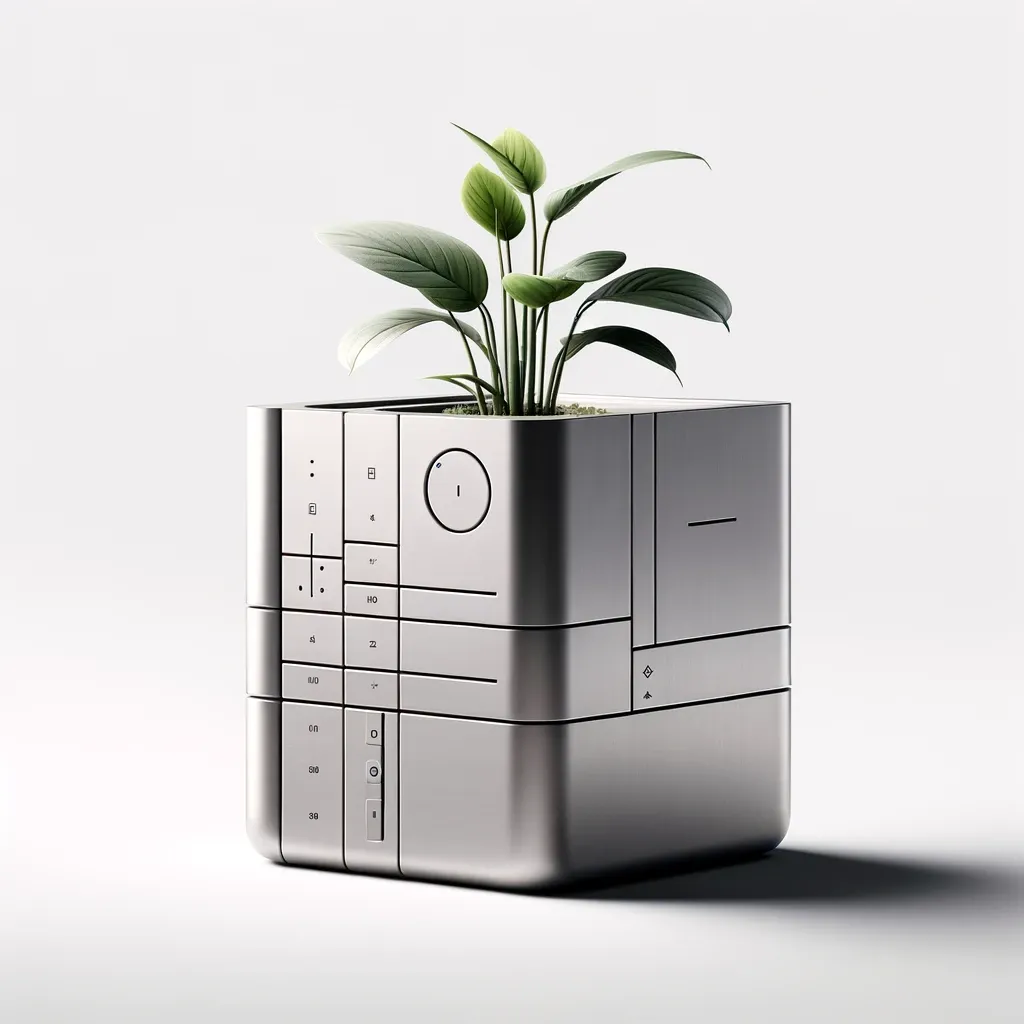
So I started sketching a planter pot with a sound engine and speaker built in. A plant radio. I used AI to visually mock up the idea, back in the early days of Midjourney. I designed a custom PCB with two stainless steel rods reading the soil. I left out the sound engine and speaker for this version as I didn't know DSP yet, and I wanted to keep experimenting with MIDI until I found the right sound.
The first batch of boards worked but needed real improvements. There were no through-hole connectors and the size of the board was too large. The second batch came out perfect. Business-card size, easy to solder. I modeled the planter, printed the parts, and put it all together. A working prototype.
Then came my favorite part: play. I've been testing this prototype for almost two years. I started recording ambient pieces, then house and hip-hop tracks sampling the biofeedback straight from the soil. Along the way I fell into DSP — wavetable, physical modeling, granular synthesis — each one pulling the sound somewhere new. MIDI let me try all of it before committing to hardware.
I know what I'm building toward now. Adding the sound engine and speaker is next.